
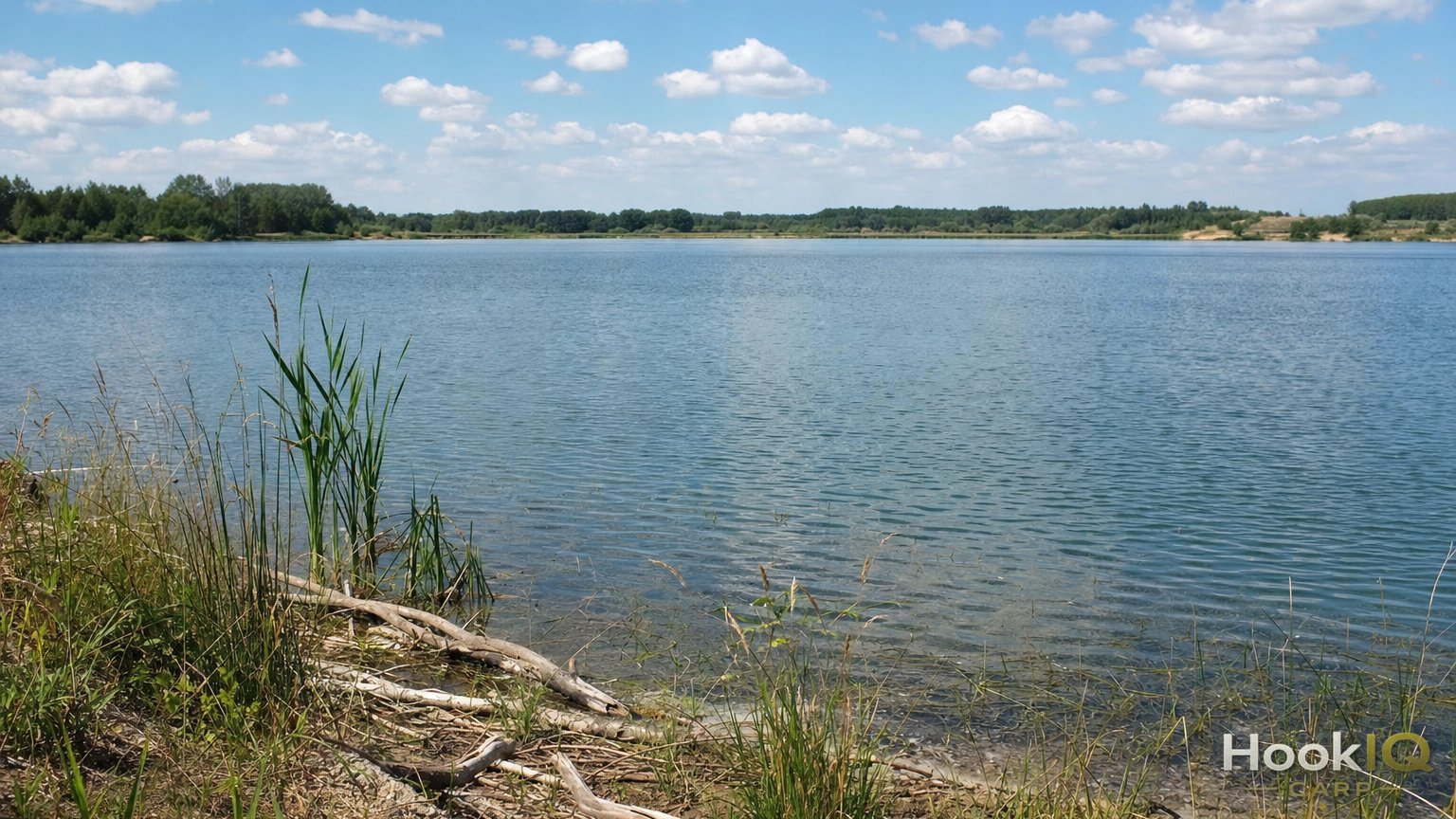
You're standing on the bank, the lake stretches out wide, and right out there — exactly where your echo sounder found the drop-off — that's where the fish are holding. Ninety metres, no problem. But those last 40 metres to the 130 mark? They're just not happening. And then comes the classic mistake: put more muscle into the cast, snap the rod harder, throw your whole body into it. The result is usually a crack-off, a break-off, or a lead that lands ten metres short of where you wanted it.
I earned these metres over years — I didn't force them. And the truth is uncomfortable but simple: 130 metres is the result of a system made up of rod, reel, mainline, shock leader, and your technique. If one of those pieces is missing, the strongest arm on the bank won't help you. It took me years to really understand this myself, because as anglers we love to believe in the one miracle fix: the new rod, the heavier lead, the single trick that suddenly adds 20 metres to the cast.
Why Brute Strength Won't Get You There
Most anglers who struggle with casting distance try to solve the problem with muscle. Understandable, but wrong. Distance comes above all from the rod loading up in a controlled way during the cast and then releasing that stored energy efficiently into the lead. Hard pulling on its own achieves surprisingly little.
What matters isn't the label on the blank. "Fast action" sounds like more distance, but that's only half the story. What really counts is recovery speed: how quickly the rod returns to its starting position after reaching maximum bend. The less it oscillates afterwards, the more energy actually goes into the cast instead of into vibration.
If a rod is too stiff for your casting weight or technique, it never really loads properly, and part of its potential simply goes to waste, no matter how hard you strike. If it's too soft, it bends beautifully but releases the energy too sluggishly. For the 130-metre range, a combination of 12 to 13 feet in length and a test curve between 3.5 and 3.75 lb has proven itself in practice — noticeably more than the 3 lb that's standard for everyday fishing. The 13-foot rods give you a bit more leverage but take more getting used to in terms of loading feel. If you haven't cast much for distance yet, you'll usually get to grips with a 12-footer faster.
Rod Action: It's All About the Interplay
Forget the idea that the stiffest rod is automatically the one that casts furthest. I've seen plenty of anglers buy a broomstick-stiff distance rod and then cast shorter than before, simply because they could no longer load the rod properly. The best distance rod is the one that matches your casting weight and technique, not the one with the biggest test curve printed on the blank.
The same goes for the lead: more weight doesn't automatically mean more distance. A heavier lead can load the rod more, but only if the rod and casting style are built for it. Overload the setup and control suffers, and your actual casting performance drops. Every rod has a sweet spot for lead weight, and something as small as 3.5 instead of 4 ounces can completely change how it loads. Test this yourself on a practice day, with a marker float and distance markers on an open field or stretch of water.
Setup Box: The Essential Kit for 130 Metres
| Component | Recommendation |
|---|---|
| Rod length | 12–13 ft |
| Test curve | 3.5–3.75 lb |
| Butt ring | at least 40mm, often 50mm |
| Lead weight | 3.5–4.5 oz (test against rod response) |
| Reel type | Big pit reel with a 45mm long-stroke spool for distance |
The Underrated Role of Your Reel
If you only look at the rod when it comes to distance casting, you're missing half the equation. A big pit reel with a large, flat spool lets the line peel off in wide loops, which significantly cuts down air resistance during the cast. Current distance models almost universally run a spool stroke around 45mm, while the 35mm spool remains the most common standard size for big pit reels overall. The difference is real: a line capacity of around 500 metres and a retrieve rate of 90 to 120cm per handle turn form the technical foundation that everything else in the 130-metre range builds on.
Just as important: the spool needs to be filled to just below the lip. A half-empty spool creates an unfavourable angle as the line comes off, and the resulting friction costs you several metres instantly. Whether you're fishing 0.30mm or 0.35mm mono, incidentally, matters less than most anglers think. What matters more is a smooth, even line surface, because wiry, stiff lines come off the spool worse and fly correspondingly worse too.
Your reel's gear ratio plays a part too. Current big pit models often run a ratio around 4.9:1, retrieving roughly 100 to 120cm of line per handle turn. That might seem beside the point for the cast itself, but it shows the moment you want to wind down tight to your bite alarm after casting out, without losing contact with the lead.
Shock Leader: The Part Most Anglers Underestimate
Without a shock leader, you'll barely reach your limit in the 130-metre range, no matter how fine your mainline is. A mainline that's too thin simply snaps under the hard acceleration of the cast, especially with braid and its low stretch. The shock leader absorbs exactly this peak load moment and protects your fingers as you release the cast.
In practice, the following figures have become standard for distance casting: a length of around 20 to 25 metres and a diameter between 0.40 and 0.60mm. That's considerably more than the short shock leader many anglers know from feeder fishing, and that's exactly where the difference lies: at 130 metres, a much larger share of the cast runs off this shock leader before the actual mainline even takes any load. Mono offers more stretch and noticeably cushions the load on the strike, fluorocarbon sinks faster and is nearly invisible but forgives fewer casting mistakes. A mono-fluoro hybrid tries to combine both properties: slightly faster sink rate than pure mono, but still enough stretch for casting.
Comparison Table: Shock Leader Materials
| Material | Casting Behaviour | Abrasion Resistance | Visibility |
|---|---|---|---|
| Mono | Very good, lots of stretch | Medium | Medium |
| Fluorocarbon | Good, low stretch | Good, sinks fast | Low |
| Mono-Fluoro Hybrid | Very good, moderate stretch | Good | Low |
| Braid (as leader) | Furthest casting, almost no stretch | Lower at thin diameters | Medium to high |
For joining mainline to shock leader, the back-to-back grinner knot has become the standard. Tied correctly, it retains around 90% of line strength and runs cleanly through your rod's rings. And here's another adjustment point: the thicker the materials, the bigger the knot gets, and a big knot catching on the rings costs you metres or, in the worst case, causes a crack-off. Knot protectors that smooth out the transition are well worth it, especially on hard distance casts: they cost a few pence but prevent exactly the crack-offs that can ruin an entire day of practice.
Then there's the question of wraps. Before casting, the shock leader should sit on the spool with three to five full turns, measured from the point where the two rod sections meet — the so-called spigot joint. Too few wraps and the knot rips through the rings under load. Too many, and you end up braking your own lead through extra friction during flight.
Line Lay: The Silent Distance Killer
When I watch an angler cast and they land noticeably shorter than expected despite a solid setup, it's surprisingly often down to how the line is laid on the spool. A badly loaded reel produces loops, small tangles during the cast, and in the worst case, the dreaded wind knot mid-flight, which brings the line to an abrupt stop.
When spooling up, one thing matters above all: even tension. I run new line through a lightly dampened cloth as I spool, which acts as a brake and stops loose wraps shifting under the tension of later layers. Braid also benefits from soaking in water for a few hours before spooling. The material lies noticeably more supple on the spool afterwards and is less prone to wind knots.
Fill the spool to just below the lip — not over it, and not noticeably under it either. If the line still comes off unevenly, you can fine-tune it with thin washers between the spool and reel body until the lay angle is right. It's fiddly work, but it pays off in real metres on the bank, not just in theory.
Casting Style: Timing Beats Power
The best gear won't help you much if the actual casting motion isn't right. Most anglers start with the off-the-ground cast, and for good reason: the lead sits on the ground behind you, you build tension through a progressive rotation of hips and shoulders, and the release angle sits at around 45 degrees. This technique is repeatable and forgives small mistakes, because the lead sits still before you even start accelerating.
The pendulum cast gets more distance out of the same setup but demands clean timing. Here you hold the rod vertically and let the lead swing in front of you at roughly eye level. The critical mistake I see in almost every beginner attempting the pendulum cast: applying power too early, while the lead is still swinging forward. The energy should only build once the lead swings back and you accelerate at the moment it reaches the top of its arc. A badly timed pendulum cast regularly lands shorter than a solid, simple overhead cast, which is why I'd advise anyone to nail the ground cast first before the pendulum cast even becomes a consideration.
One detail many people forget: both hands work at the same time. While the bottom hand at the butt pulls the rod back, the top hand on the fore-grip pushes forward at the exact same moment. This opposing timing builds maximum rod bend before you even think about the release. Practise this hand movement a few times without any lead on the hook at all, just standing on the bank, until it feels automatic. Only then is it worth moving on to casting with real weight.
Practical Checklist for the 130-Metre Cast
- Spool filled to just below the lip, no half-empty spools
- Shock leader 20 to 25 metres, diameter 0.40 to 0.60mm
- 3 to 5 wraps of shock leader on the spool before casting
- Back-to-back grinner knot with a knot protector at the rings
- Test lead weight in 0.5oz increments, don't just pile it on by feel
- Master the off-the-ground cast cleanly first, pendulum cast only after
- Use the line clip to reliably repeat the distance you've found
The Bottom Line: 130 Metres Is a Learnable Skill
The metres you've been missing rarely live in your arms. They live in how well rod action, reel, mainline, shock leader, and a casting style you've actually trained — not just tried once — all work together. Set aside an afternoon at an open water or a field, cast without a rig attached, watch your spool, and adjust your setup step by step. When every part of the system does its job, the 130 metres come almost on their own.