
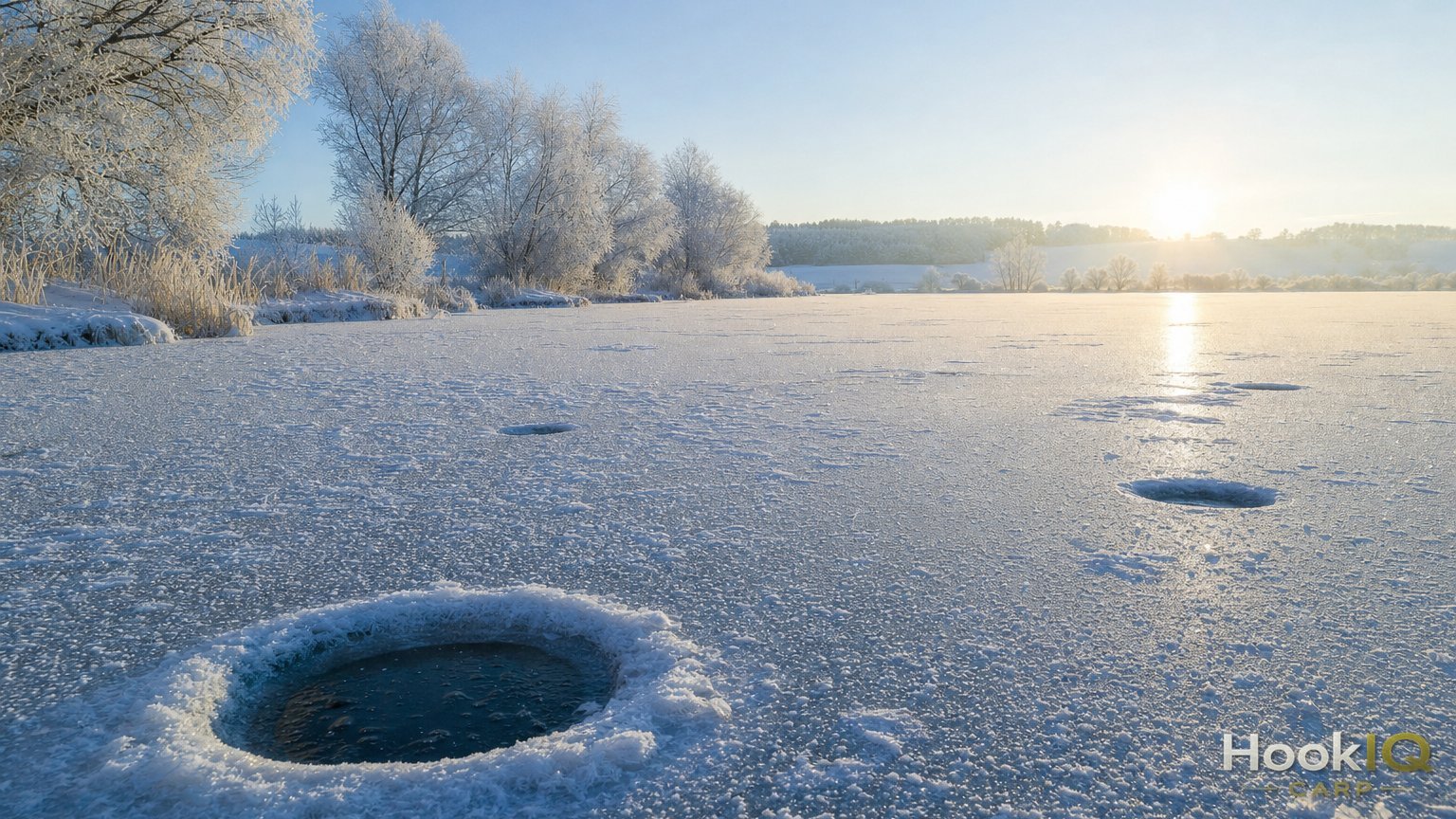
Three in the morning, the temperature's barely above freezing, and you're lying awake because your toes have gone numb and drips from the bivvy roof are landing on your sleeping bag. Anyone who's spent a December night at the water knows this exact combination of cold and damp. Most of the time it comes down to misjudged gear, not bad luck. Your bivvy needs different numbers in winter than in August, your sleeping bag needs a rating that actually means something, and your heater can't become a gamble. Here's what really matters on the four points that decide whether you get a restful night or a miserable one.
Hydrostatic Head: Why One Number Decides Comfort or Frustration
Every bivvy gets marketed with a hydrostatic head rating, usually a number followed by "mm HH". It sounds technical, but it's simple: the figure tells you how high a column of water the fabric can hold before it starts letting water through. 10,000mm means you'd need a 10-metre column of water to force its way through. That's plenty for a summer shower. For a winter session with constant rain, snow load, and days of pressure on the roof, it's the bare minimum.
I only fish 10,000mm-plus material in winter now, and for longer sessions with a rough forecast I'd rather go towards 20,000mm. You barely notice the difference during the first shower. It's only after the third night of solid rain that you find out whether the fabric starts sweating through or simply gives up.
Hydrostatic head compared (2026):
| Bivvy / Material | Hydrostatic Head | Verdict |
|---|---|---|
| Fox EOS 1 | 8,000mm | Solid entry-level, fine for short autumn trips |
| Nash Titan Hide XL | 10,000mm | Good middle ground for most winter sessions |
| Solar Worldwide Brolly System | 10,000mm | Built-in gutter system, useful in constant rain |
| Nash Titan T2 Pro (Aquasense) | 20,000mm | Premium, for long sessions in extreme weather |
| Fox Frontier Shelter (VenTec/Aquatexx) | 20,000mm | Premium, paired with breathability |
| Solar SP Uni Spider (SolarTex D) | 20,000mm | Premium, with built-in vapour barrier against condensation |
A high hydrostatic head on its own doesn't help if the fabric isn't breathable too. Pure plastic sheeting keeps rain out, but it also traps your own breath moisture inside. That's why the premium fabrics combine both properties, and that pays off again later, when we get to condensation.
One knock-on effect a lot of anglers miss: the same logic applies to your clothing. Waterproof jackets and trousers for a session are rated in mm of hydrostatic head too, and decent gear sits well above entry-level numbers. If your jacket lets water through before your bivvy does, something's wrong with your kit hierarchy.
Hydrostatic head only tells you about the fabric itself, not the whole shelter. Sealed seams and a properly zipped-in groundsheet matter just as much. A bivvy rated 20,000mm on the roof but with open seams at the corners will still let water in, just somewhere else. Before every winter session, check the seam sealing and the joins between roof, side panels and groundsheet. It takes five minutes during setup and saves you a nasty surprise on the third rainy night.
Sleeping Bag System: The Biggest Number on the Label Is Rarely the Important One
Winter sleeping bags love to advertise an "extreme temperature" rating of minus 15 or minus 20°C. That's the number that makes the biggest impression, and it's the least useful one for your buying decision. The European standard EN 13537, now superseded by ISO 23537, actually breaks it down into three figures:
- Comfort rating: the temperature at which an average person can sleep relaxed, without feeling cold
- Limit rating: the temperature at which you can just about avoid getting dangerously cold, but it's uncomfortable
- Extreme rating: pure survival temperature, nothing to do with a decent night's sleep
Buy on the comfort rating, not the extreme rating. If you're bivvied up at minus 5°C, you need a bag with a comfort rating of minus 5 to 0°C, not one boasting an extreme rating of minus 20. One more detail from the standard that often gets overlooked in practice: the comfort rating for women averages around 5°C higher than for men, because metabolism works differently. If you're fishing as a couple and sharing a bag, or buying two identical models, that's worth factoring in.
Setup box: My winter sleep system
- A sleeping bag with a comfort rating around 0°C, for example a 5-season model with a ripstop outer and 20,000mm hydrostatic head (roughly £170 to 190)
- A thin fleece liner as a second layer, zipped in when needed instead of carrying a heavier bag
- A sleeping mat or heated fleece underlay between the bedchair cover and the sleeping bag, because cold from below bites harder than cold from the side
- A spare hat and dry socks, kept strictly for the night and never worn out on the bank
One practical tip on the bedchair itself, picked up from experienced winter anglers: pack a small spirit level to get the bedchair properly level. On uneven ground, a two- or three-degree tilt won't bother you on the first night, but by the third night you'll be sliding sideways constantly and sleep gets restless. Five minutes levelling up at the start of the session saves you that hassle completely.
A second bedchair point that's often underrated in winter: ground clearance. The closer the sleeping surface sits to the ground, the more cold rises up through the frame. Models with slightly longer legs and a taut fabric let cold air circulate underneath instead of pooling, and combined with a sleeping mat between the cover and the bag, that makes more difference than spending extra on an even thicker sleeping bag.
Heating in the Bivvy: Warmth, Yes, But With Clear Limits
A heater in the bivvy is often the difference between a session you push through and one you pack in after two nights. At the same time, this is a topic with a real risk I'm not going to sugar-coat: carbon monoxide poisoning from gas heaters in poorly ventilated shelters is a genuine and recurring hazard, documented again and again on angling forums. CO comes from incomplete combustion and it's odourless and colourless. You won't notice anything until it's too late.
Three rules I follow without exception:
- Never repurpose a gas camping stove as a heater. Forum reports consistently flag this as a common cause of accidents.
- A CO alarm costs under £20 and belongs in the bivvy the moment any form of combustion is involved.
- Always leave a vent open, even if it costs you a few degrees of warmth.
Heaters compared:
| Unit | Output | Notable feature |
|---|---|---|
| Seven Oaks Heater | 600–1,600W | Low-oxygen shutoff |
| Gazcamp Heatbox 2000 | 2,000W | Thermostat adjustable 2–25°C |
| Mr. Heater Portable Buddy | 1,200–2,400W | Up to 6 hours run time per cylinder |
| Catalytic heaters (general) | varies by model | Cooler outer surfaces, but CO alarm and ventilation still essential |
As an alternative to heating the air, in milder winters I'll often go for a heated bedchair underlay instead of gas. A heated blanket with multiple settings, say a quick-heat mode around 35W and a sleep mode at 29 to 31W, runs happily off a power bank and only warms the surface actually touching your body. That's more energy-efficient than heating the whole bivvy's air, and it removes the entire CO issue completely.
As a rule of thumb: once it drops to 8 to 10°C outside, I start actively heating. But a gas heater should never run continuously through a full night's sleep, even with a low-oxygen shutoff fitted. Running it to warm the bivvy before bed and then switching off works more reliably in practice than keeping it on all night.
Condensation: The Underrated Enemy of Every Winter Session
Condensation happens because your breath is warmer and more humid than the inside of the bivvy wall. When that moist air hits the cold surface, the water drops out, and by morning you've got drips on the roof ready to fall on your sleeping bag at the slightest knock. The bigger the temperature gap between inside and outside, the worse the problem, and in winter that gap is naturally at its largest.
Twin-skin systems, where a second inner layer creates an insulating air gap between you and the cold outer wall, cut the problem down significantly, even if they don't eliminate it entirely. Models like the Solar SP Uni Spider with its built-in vapour barrier, or comparable twin-skin bivvies from other brands, work on exactly this principle. Having adjustable vents you actually crack open at night matters more than any premium fabric.
Five concrete steps against condensation:
- Crack a vent open at night by at least a little, even in frost. The small amount of heat you lose doesn't come close to a soaked sleeping bag surface.
- Never dry wet clothing or damp towels inside the bivvy, they release that moisture straight into the air around you.
- Air out the groundsheet regularly, or fold it back briefly in heavy damp, since a wet groundsheet makes condensation worse from below.
- Before packing down in the morning, wipe the inner wall with a small microfibre cloth. It takes two minutes and stops moisture, and later mould, from working into the seams.
- When buying, look for breathable membranes rather than plain plastic coating. A fabric at 20,000mm with breathability outperforms plain PVC at the same rating when it comes to condensation.
Bottom Line
A dry, warm winter session comes down to four decisions you make before the first cast: enough hydrostatic head on the bivvy, a sleeping bag matched by comfort rating rather than an impressive-sounding extreme rating, a heating setup you can run without risk, and a deliberate approach to condensation before your sleeping bag gets wet. Work through these four points before the session and the night at the water gets a lot more bearable. In the end, that's all that matters: standing at the rod pod wide awake and well-rested when the alarm goes off at five in the morning in December.