
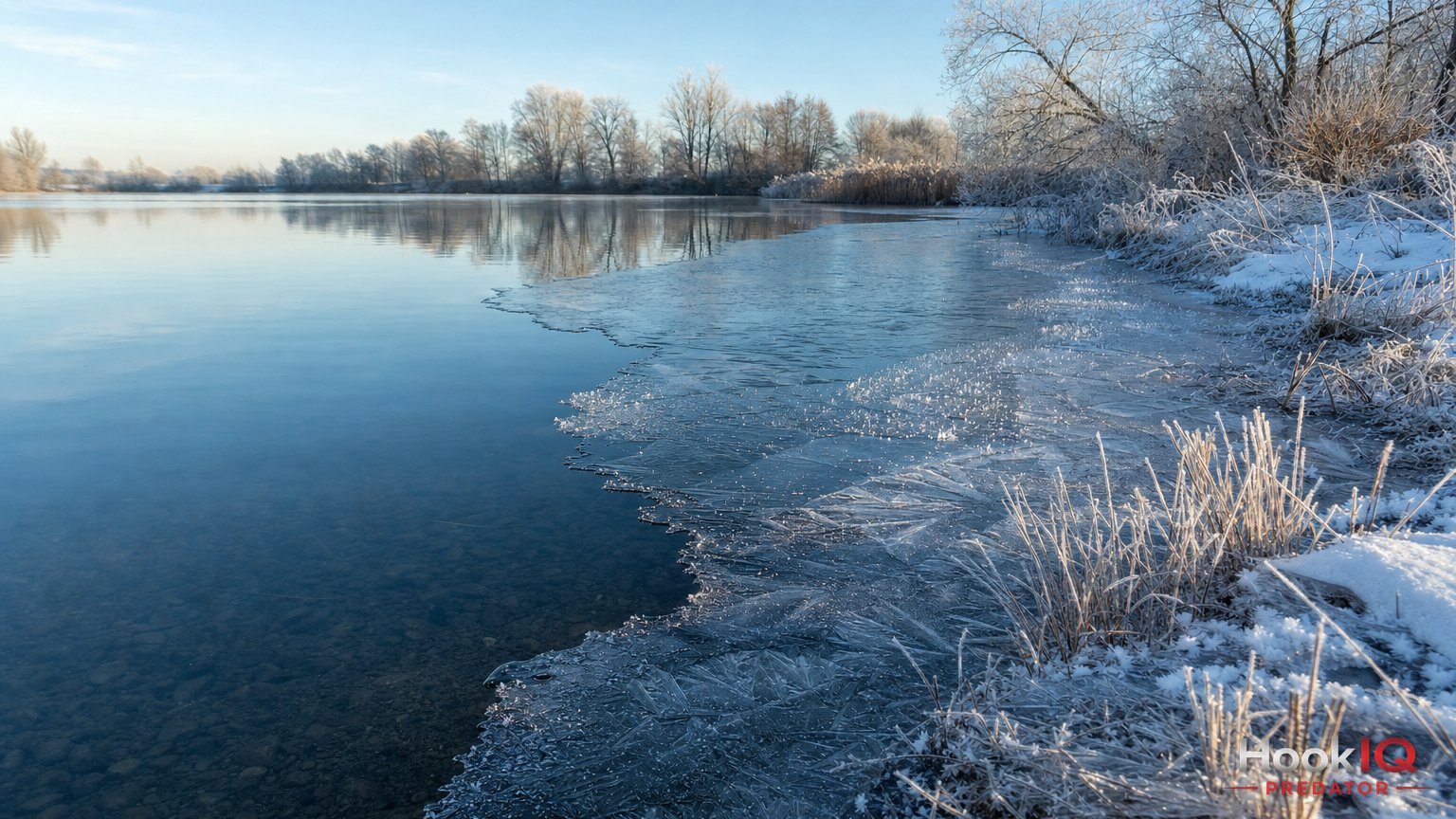
I remember a January morning at a flooded quarry lake in the Upper Midwest. Three degrees below freezing, my fingers numb despite the neoprene gloves, and along the shoreline a thin skin of ice reached maybe two meters out into the water. Most of the anglers who'd shown up that day packed it in after an hour without a single knock. I stayed, because I knew that exact edge between ice and open water was where the perch were holding right then. By the end of the day I'd landed nine fish — none of them big, but every single one a small win against a season most spin anglers write off completely.
Winter perch fishing is a different game than perch in May or September. If you're still throwing the lures and retrieve speeds of late summer once the deep cold sets in, you'll go home empty-handed most days. Perch need a completely different approach now, and that's exactly what this article is about.
Why Winter Perch Play by Different Rules
At water temperatures around 39 to 43°F (4 to 6°C), a perch's metabolism drops to a bare minimum. It stops actively hunting over long distances and instead waits until a prey item shows up almost right in front of its mouth. That changes everything you do on the water. Long casts and fast retrieves almost never produce in winter, because the fish simply won't chase the lure anymore.
Something I've watched happen winter after winter: perch bunch up extremely tight this time of year, often sitting right on the bottom or just above a drop-off, and they barely move outside that tight radius. If you don't put the lure within about a foot and a half of the fish, nothing happens. That's why classic casting techniques so often fail in winter — and why vertical presentation works so much better.
The Micro-Jig: Why Smaller Catches More Right Now
In summer I like throwing a 3-inch shad along the canal, because perch are aggressive and curious then. In winter I swap out the entire tackle box. I go with soft plastics between 3 and 5cm — small creature baits or slim finesse worms — rigged on jig heads between 1 and 3 grams. That sounds like nothing, but that restraint is exactly what separates a fish that ignores the bait from one that inhales it.
Color matters less in winter than most anglers think. I do well with muted, natural tones — browns, greens, a subtle motor oil — with just a hint of glitter for flash in deeper water. What really counts is lure size relative to the fish's sluggish metabolism. A tiny morsel that costs almost no energy to eat gets picked up far more readily than a big bait that just isn't worth the chase in winter.
For the rod, I go with a finesse setup and a soft tip this time of year, so I can actually feel the tentative bite of a lethargic perch. A braided mainline in 0.08 to 0.10mm paired with a short 0.16mm fluorocarbon leader gives me plenty of sensitivity without spooking fish in gin-clear winter water.
Vertical Presentation: Control Over Casting Distance
Vertical jigging means working the lure straight down under the rod tip — whether from a boat, a dock, or just standing on the bank above a steep drop-off. The big advantage over a classic cast is control. You feel every inch of the fall, you can hold the lure right at the depth the fish are sitting, and you often detect the bite the instant the line simply stops falling.
I let the micro-jig sink all the way to bottom first and count how long it takes. That number is gold — the second I land a fish, I know exactly what depth it was holding at, and I can drop the next cast right back on that zone. After that, I lift the lure just a few centimeters, hold it there for a beat, and let it back down. No big hops, no frantic snaps. Winter perch respond to movement barely bigger than the natural shiver of a cold, half-frozen baitfish.
Slow It Down: Patience as Bait
If I had to sum up the one thing that separates a good day from a blank in winter, it's this: you have to fish slower than feels right. Every instinct tells you to add more movement, because you're the one freezing out there and want to stay active. That instinct is exactly the mistake.
I build in deliberate pauses of three to five seconds between every small movement. During that time the lure just sits there, moving at most a hair from residual tension in the line — and that dead-still window is where most of the bites happen. A winter perch will often study a lure for several seconds before committing. Move it again too soon, and the window closes. Sometimes I leave the jig completely still for ten, twenty seconds, which feels like forever out on the water — but that patience is what's put the most fish in my net during cold winters.
Ice-Edge Spots: Where Winter Perch Hold
On a lot of still waters, a hard winter builds a thin skin of ice that grows out from shore while the middle of the lake often stays open. That exact transition zone — the edge between ice and open water — is one of the most reliable perch spots I know. Under the ice it's usually calmer and darker, while right along the edge there's still some light and oxygen exchange happening. Baitfish schools like to stack up in exactly that strip, and wherever the small fish are, perch are never far behind.
It's also worth checking areas where warmer water is entering the lake — small feeder creeks, outflows, or discharge points. Even a one-degree difference can decide whether a spot still holds life in the dead of winter. Steep banks, old harbor basins, and the channels along seawalls are usually my first stops when I'm sizing up a new winter spot. One thing matters above all: never lose sight of your own safety. Thin ice along the shore won't hold your body weight, and in those conditions I stay firmly on solid ground or stable footing — the lure takes the risk, not me. (Regulations and ice-safety guidance vary by region — always check local conditions before heading out.)
The Bottom Line
Winter perch on micro-jigs isn't a game for the impatient, but it's one of the most rewarding techniques I know. A small lure, vertical presentation right under the rod tip, and a pace that feels almost wrong it's so slow — those are the three dials to turn before you head out in winter. And the next time you're standing there on a freezing day wondering if the trip is even worth it: right along the edges of the ice, where everyone else has already given up, the fish are waiting for exactly one angler patient enough to find them.