
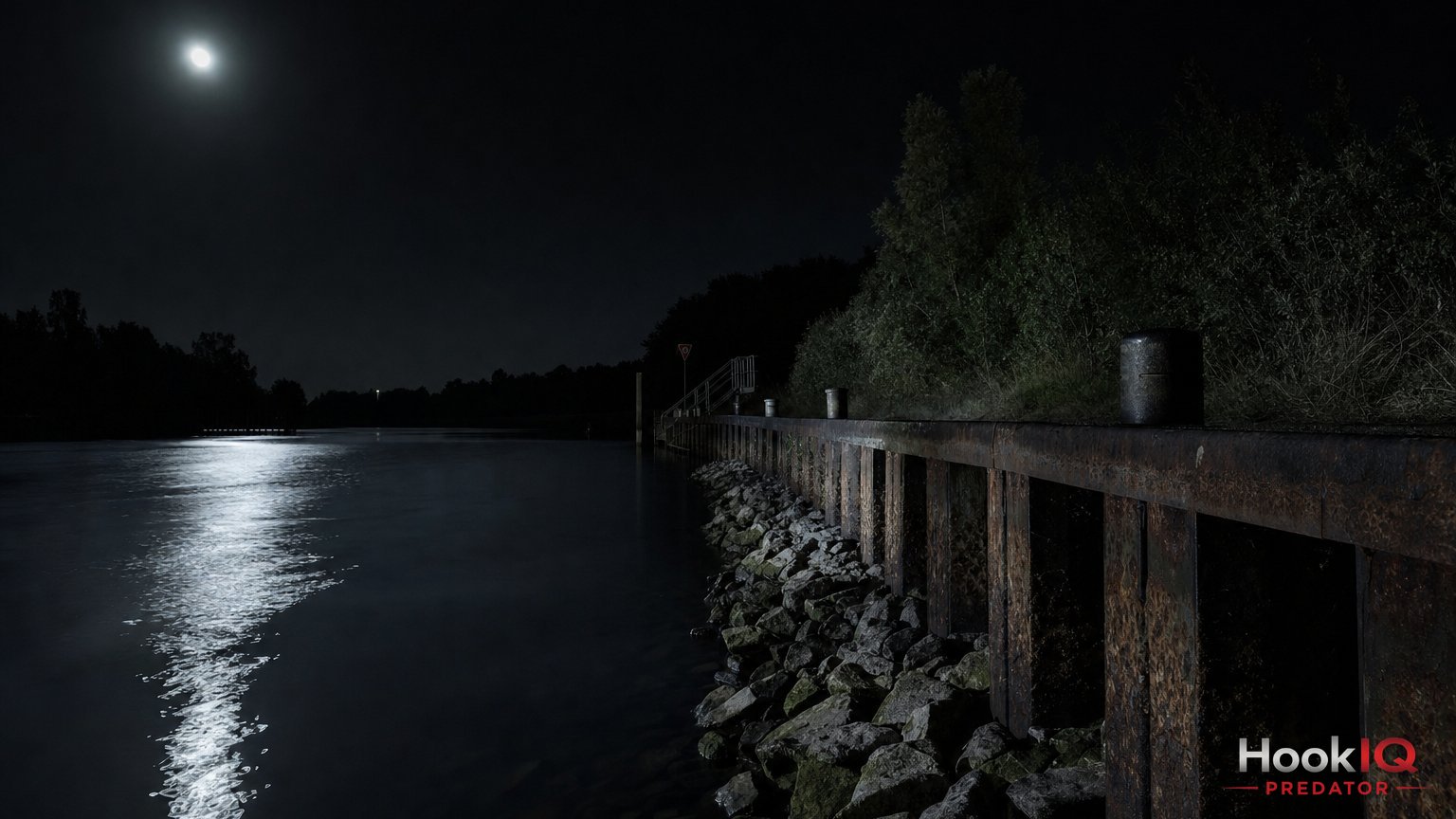
For a lot of anglers, a commercial shipping canal is the dullest venue imaginable. A dead-straight channel, steel on the left, steel on the right, grey water in between that only shows a flicker of life when a freighter ploughs through. I understand why most people drive straight past it. And honestly, I'm glad they do. Because this exact canal, the one everybody writes off as dead, has handed me more good zander in thirty years than plenty of picture-postcard rivers ever have. You just have to learn to read the steel.
Why the Sheet Piling Is a Zander Magnet
A canal is naturally short on structure. That's exactly why every edge, every kink in the bottom, every transition becomes so important. And the longest, most reliable edge of them all is the sheet piling itself. That steel wall doesn't drop straight into the abyss — it has a foot. Usually there's a bed of rock armour down there, dumped to soak up the wash from passing ships, and it's on that rubble that life collects. Baitfish find shelter between the rocks, crayfish sit in the cracks, and the zander knows it perfectly well.
The fish rarely sits out in the middle of the canal. It presses tight to the wall, often right at the foot, where the rock packing gives way to the flat bottom. That foot line is your single most important zone. In most canals you'll find it two to four metres out from the wall, depending on how steeply the profile drops away. When I fish a new stretch of canal for the first time, I spend the first half hour doing nothing but feeling out the depth with a soft plastic, working out where the rocks stop and the soft bottom begins. You only find that transition with the lure — no fishfinder replaces the feel through the blank when the lead ticks over the rocks and then suddenly sinks clean.
How to Fish the Wall Properly
The mistake I see most often on the canal is the cast straight across to the far wall. It looks the part, but it does little, because the lure spends most of the retrieve swinging over the dead, flat bottom out in the middle. You're far better off fishing parallel to your own wall. Cast flat along the steel, as close as you dare, and let the lure drop down the edge. That way your shad stays in the hot zone for the whole retrieve instead of just crossing it once.
Jigging along the wall is all about control. I fish a classic two-turn rhythm — wind the lure up with two turns of the reel, then let it sink back down onto the rocks on a tight line, fully under control. The take almost always comes on that drop: that unmistakable tap in the rod tip, and sometimes just the absence of the ground contact you were expecting. When the lead doesn't land, when the line keeps running even though the lure should have been down by now, a zander has taken it on the fall. Strike — instantly and hard.
When it comes to jig head weight, most people on the canal are fishing far too heavy. Because there's barely any current, you don't need a lead that drags the lure down like a stone. On a normal canal of four to five metres I usually fish ten to fourteen grams, and on shallower stretches sometimes just seven. The aim is a long, seductive drop of two to three seconds. Everything is decided in that phase. If the lead is too heavy, the lure crashes through and the zander has no time to react. For the shad itself I like to run twelve centimetres on the canal — natural tones like motor oil, roach or herring in clear water, and in coloured water after the boat traffic you can get away with a loud firetiger or something white.
Mooring Berths: The Underrated Hotspot
If the sheet piling is the reliable edge, then the ships' mooring berths are the hidden treasure chests. Everywhere freighters tie up — at loading points, in harbour basins, at waiting berths above locks — a whole underwater world has built up over the years. The propellers have scoured out the bottom and dug deep holes. Old bollards, chains, sunken junk and slabs of concrete lie down there. That's exactly the kind of structure a zander is hunting for in an otherwise barren canal.
These scoured-out depressions at mooring berths are often one to two metres deeper than the surrounding canal. Cooler water in summer, a bit more oxygen from the churned-up structure, and endless hiding places for prey fish. On hot August days, when the canal water is sitting above twenty degrees, the bigger zander like to drop back into these deeper holes. Find a spot like that, work the edges of the depression systematically, and you'll often land the fattest fish of the whole stretch right there.
One important note from experience: at occupied berths with ships tied up, show some respect. Where a ship is moored, people are working, and nobody's happy about a line tangling in a mooring rope. So I prefer to fish berths when they happen to be empty — in the early hours or at the weekend. The scoured structure stays put even when the ship is gone. And the zander would rather sit in a depression where things are quiet anyway.
Read the Ship Traffic Instead of Cursing It
Now to the point that really decides everything on the canal — and the one most people get completely wrong. Ship traffic is not your enemy. It's your most important ally, once you learn to read it.
A passing freighter does three things at once. Its propeller churns up sediment and colours the water. Through displacement it pushes a suction wave ahead of it that literally drags the water away from the bank and flushes the baitfish off the rock armour. And its prop scatters whole shoals of prey fish. For the zander, that's the starting gun. The short window right after a big ship has passed is one of the most reliable feeding windows I know on the canal. The water suddenly turns coloured, the zander feels safe, the prey is disorientated, and it exploits all of that without mercy.
I time my casts to this rhythm. When a freighter comes, I lift the rig briefly out of the danger zone and wait until the worst of the surge has gone through. Then, in the five to fifteen minutes that follow — when the churned-up water is settling but still coloured — I fish the wall hardest of all. Watch the suction wave: just before the ship's momentum pushes the water back again, a short but fierce current forms at the foot of the sheet piling. That's exactly when the zander is lying in ambush. On busy canals, where something comes through every few minutes, you get fresh feeding windows again and again all evening. On quiet side canals you'll have to lean more on the low light of dawn and dusk instead.
When I Head Out, and With What Gear
In high summer the canal is a venue for the fringe hours. During the day, in full sun and heated water, the good fish sit deep and lazy in the mooring holes. The golden time begins when the sun drops low. The last hour before dark and the first hour after it are almost unbeatable on the canal in August. That's when the zander move up to the foot of the sheet piling and go on the hunt. Fish right through the night and you'll often catch the very biggest fish, especially on mild August nights when the water has been cooking all day.
There's not much to say about the tackle — it's classic canal jigging. A rod around 2.40 metres with a casting weight up to about forty grams gives you the feedback you need to feel the hesitant ground contact and the delicate take. I fish braid in 0.12 to 0.14 millimetres, because I want to register every touch against the rock armour, and behind it a fluorocarbon leader of a good metre in 0.30. The sharp-edged steel of the sheet piling and the rocks at its foot are line killers. Check your leader after every fish and after every snag, or one day you'll pay for it with the fish of your life.
My Verdict
The shipping canal doesn't reward fair-weather anglers or scenery romantics. It rewards the ones who can read structure where others just see grey water. Fish the sheet piling parallel and focus on the foot of the rock armour. Make a note of the mooring berths with their scoured-out holes — that's where the big ones sit. And above all: stop cursing the ship traffic. Learn its rhythm, fish the colour after a boat has passed, and the canal will hand you zander that the anglers on the pretty rivers only dream about.